
White Man Tears
Nate Silver and the Growing Insecurity of the Male Media

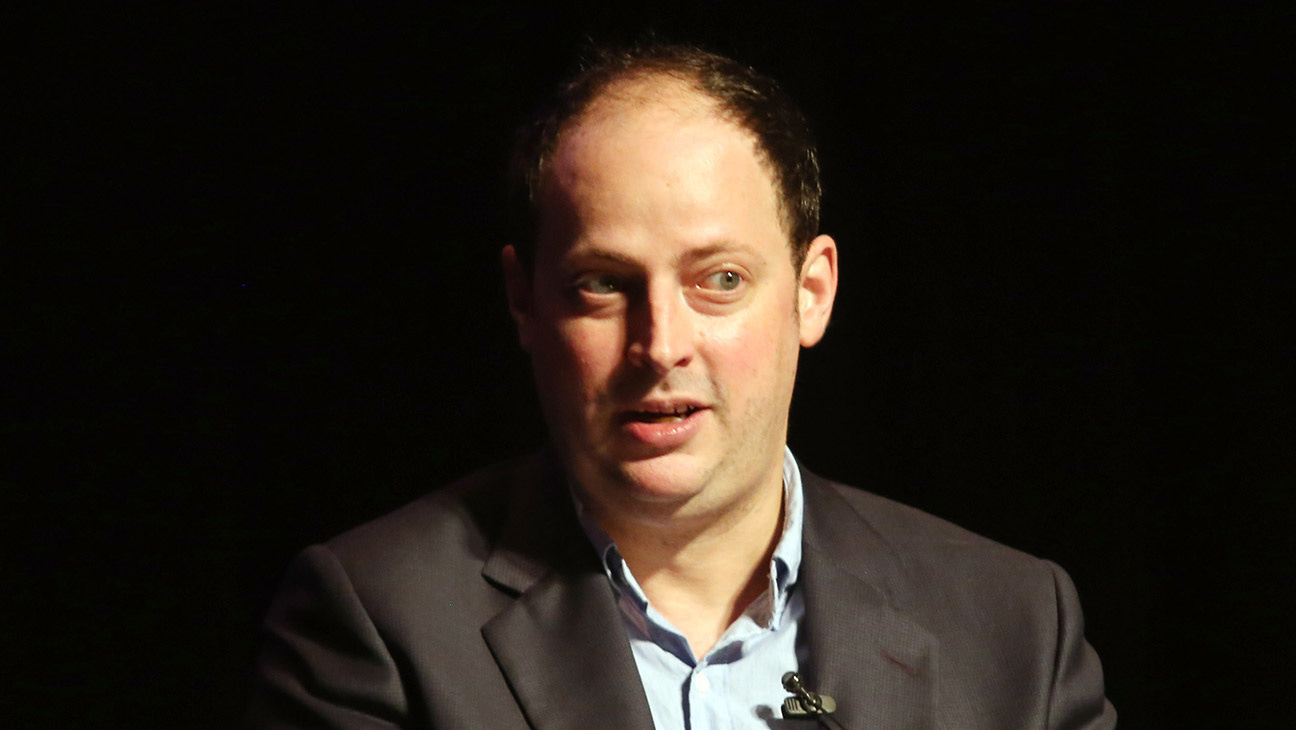
In the week before the holiday news doldrums, Obama-era polling data darling and FiveThirtyEight.com founder, Nate Silver, tweeted a poorly-articulated takedown of historian Heather Cox Richardson (HCR), without provocation. For context, parent-company ABC decided to shutter 538 early this year. Silver’s contract with 538 was “not renewed” in 2023. While considered a pioneer of “data journalism,” Silver has been out of mainstream media since. Through his podcast, Risky Business, his is a voice that carries residual sway with a subset of data nerds, bitcoin bros, and game theorists. He is a secondary character in a larger modern frontier dramedy.
The media feels like the Wild West these days — survival means all posture and plunder, no rules. The opinion pages at The Washington Post were given a new editorial directive by billionaire-owner Jeff Bezos to focus on “personal liberties and free markets” that signaled a sharp veer right and resulted in the exodus of top journalists.
More recently, Ezra Klein bumbled his way through the podcast circuit with his version of the Democratic “big tent,” which was liberal nice guy-coded, but somehow excluded any voice that wasn’t white, male, and upwardly mobile.
Shortly thereafter, Ross Douthat hosted a grudge match on his podcast between two intelligent conservative women over the profoundly absurd question, “Did Women Ruin the Workplace?” with three successive NYTimes headlines that couldn’t quite stick the landing. It might have been a satisfying moment for Douthat’s ego, but intellectually worthwhile, it was not. (Leah Libresco Sargeant’s time was wasted, but she is worth hearing anywhere else for her interesting take on women’s role in society.)
The still-smoking gun: CBS News hired Bari Weiss as editor in chief, who promptly killed a major “60 Minutes” story about CECOT prison because reporting the truth provided the President inadequate cover for his administration’s crimes, and because David Ellison really wanted a merger for the new year.
In its desperation to stay relevant, the mainstream media has become a rodeo of panderings to egotistical fragilities that makes it anything but.
On their faces, these little performances may not seem worth anyone’s time. They come and go as fast as the news cycle. But when taken together, they are important clues to who controls the media narrative, and to understanding why such control helps maintain parts of our social hierarchy that do not serve the equal interests of the majority.
While disappointing, it is not surprising, then, that this month Nate Silver has opted to die on a buffoonishly public hill, in an entitled grab for the optics of political and moral superiority. Let’s take a closer look.
In the aforementioned tweet, Silver called HCR’s massive Substack following, “the Democratic version of the Tea Party.” Quippy, but huh? His characterization of a movement rooted in progressive righteousness and disdain for public opinion read very much as, “Hello, Pot. I’m Kettle,” but he failed to notice that the targeted pot was actually a high-end espresso machine. Still, he was so pleased with the tweet’s virality (if he says so) that he wrote a longer-form piece on his own Substack to make a full meal of his thoughts.
The longer piece details something that journalist Jamelle Bouie astutely called “turning things he [Silver] doesn’t like into a bespoke ideology.” In the piece, Silver names Richardson the de facto leader of a new political subgroup he calls Richardsonism. In Silver’s schema, Richardsonism is one of three sects of the modern Democratic party, alongside Capital-L leftists, and Abundance liberals, with whom he predictably aligns himself. He quickly dismisses Capital-L leftists as perpetual failures (despite AOC, Bernie, and Mamdani having some recent successes, he admits). But Richardsonists, and HCR herself, really annoy him.
And that is where the argument stops making sense. He flails for paragraphs about how HCR released early speculative reports as fact in the wake of Charlie Kirk’s death (which every news outlet was doing in absence of real information). He derides her for making significant income from her free Substack, as his very post attempts to do. He sneers at the fact that she posts her writing at midnight, from Maine. The horror. He holds her to arbitrary journalistic standards, although she has never claimed to be a journalist. He takes issue with the appeal of her academic expertise as an alternative to the mediocre clickbait of the mainstream news cycle.
He lectures about HCR’s lack of self-critique and moral fabric, but is happy to tell the reader that his own safely-center stance on immigration “isn’t as unpopular as you might think.” (This is the kind of baseless self-congratulation we have come to expect from the President, but not from serious people.) He attempts to dismiss HCR’s massive popularity in contemporary political and historical discourse by likening it to his own brush with fame in an appearance on Late Night with Stephen Colbert. Same-same, right? No, Nate. Not the same.
Writers — professionals like Bouie, and otherwise — have commented on Silver’s seemingly unfounded attack on HCR. Some have called him small and irrelevant. Some chimed in to echo Silver’s sentiment. All of Silver’s own flimsy attempts to cite proof of this non-phenomenon are from male writers in books, journalism, and on Substack. But not a single take that I have seen has addressed the 650 lb. gorilla on the platform: Heather Cox Richardson is a woman, and an extraordinary one.
HCR is a career academic with a doctorate from Harvard. With 2.5 million followers on her Substack, Letters from An American, (+10x more than Silver’s) her voice has become central to contextualizing our modern political moment within American history for people every day. Her opinion is sought after by NPR, The New York Times, Time Magazine, and news podcasters like Paul Krugman , Katie Phang , and Katie Couric . She is the hot interview ticket on Substack for legacy journalists of integrity who have abandoned their sinking ships. She is listened to and valued. She cites reliable sources in every post. She speaks in plain language on topics about which other mainstream pundits love to wax elitist and esoteric. She has an opinion. She doesn’t claim to be the last word.
Ultimately, Silver’s attempt to frame HCR within a self-styled political movement with a dubious agenda under the guise of Democratic critique is a poor veil for what is really happening. Nate Silver clearly does not like HCR. But more than that, he just doesn’t like women. He points out that “educated women” are the mainstay of the Richardsonist base, as a bug, not a feature. Again, the horror. He plays a marathon round of CYA to signal that he is a liberal good guy, but can’t seem to name his own behavior for what it is: a tantrum in the face of a perceived threat. He sheds a lot of white man tears over traits and accomplishments he finds offensive coming from a woman, but is happy to claim as his own prerogative: high intelligence, recognition, respect, independent thinking, and proper compensation for talent and service.
In all of this mud-slinging over one successful woman, some actually interesting questions rise to the surface. What if women did develop a political party that listens and speaks directly to the struggles of all citizens’ histories, not just around them where it is convenient and virtuous? (Abundance lib-dudes, I’m looking at you.) Would it be so catastrophic to concede where patriarchy has, in fact, been wrong in its political and social thinking for centuries, and that maybe a fresh approach is warranted? (I’ve heard self-critique is really where the moral high-ground lives.) Wouldn’t it be wise to remember that women have been the backbones of many of the great social movements in the history of our country and the world? Perhaps that is too much change for Nate Silver to quantify.
On a more systemic, but extremely less interesting level, the inability to believe (trust, acknowledge) women that Nate Silver exhibits in his rambling description of an imaginary political faction reinforces a problematic fracture in the mainstream media at best. At worst, it is a farm-fresh example of the fragility of men in positions of perceived authority when women have a different, more popular, or more astute understanding of our current moment and the road ahead.
Establishment thinking is easy — reassuring even — if you happen to belong to the group whose interests it was designed to serve. You can shine it up with whatever lip service to marginalized interests you want. We see it in government, in work, in the chronicling of our times. America has never truly valued women as full participants. This is the way it has always been, goes the common argument. But to actually believe in the liberal ideals of justice, personal freedom, and equal representation upon which our country was founded requires constant reexamination of whose existence is included and whose is not, without fragility and with unwavering resolve.
The revolution will not be mommied.
Have a great week,
IWW
This. Was. Incredible. Every last word. Thank you for this excellent read 🙏 I have now subscribed to HCR, but definitely not to Nate Silver.